


Most couples who sit across from me carry the same quiet fear. That something is wrong with one of them, and that it’s somehow their fault. It almost never works that way.
Infertility usually traces to one of a few places: ovulation, the fallopian tubes, the uterus, or the sperm. And in plenty of couples it’s a bit of both sides at once. Very roughly, it’s the woman about a third of the time, the man about a third, and the rest is shared or never fully pinned down. That last group frustrates everyone, me included.
So I can’t tell you the cause from across a desk. We test both partners, because guessing only wastes the one thing you can’t get back. Time.
“Patients often want a single reason for infertility, but it’s usually a mix. That’s why we look at both partners together, rather than assuming the cause sits with one of them,” says Dr. Mohit Saraogi, an IVF and fertility specialist at Saraogi Hospital in Mumbai.
Trying to understand why pregnancy isn’t happening? Book a consultation at Saraogi IVF Centre.
First, some perspective

somewhere near 186 million worldwide.
And here’s what nobody mentions when the relatives start asking. Even when everything is working perfectly, a young couple has only about a 20 to 25% chance of conceiving in any single month. One quiet year doesn’t mean something is broken. It’s just about the point where I’d suggest getting checked, or after six months if the woman is past 35.
Getting pregnant is really a chain of small steps. A healthy egg. Healthy sperm. Open tubes. The two actually meeting. Then the embryo settling into the uterus. Miss one step and the odds drop.
What causes infertility in women?
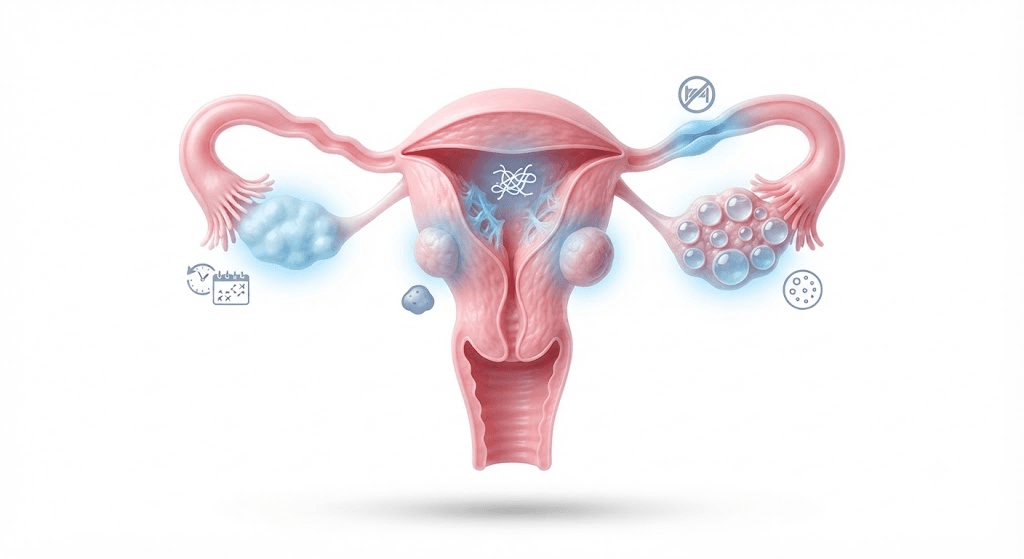
On the woman’s side, three areas cause most of the trouble.
Ovulation comes first. When the ovaries don’t release an egg on schedule, often because of PCOS or a thyroid problem, there’s simply nothing to fertilise that month. Next are the fallopian tubes. If they’re blocked, usually from an old infection or endometriosis, the sperm and egg never meet. The uterus can get in the way too, when fibroids, polyps or scar tissue make it hard for an embryo to settle.
Sitting quietly behind all of it is age. Egg quality starts sliding years before menopause, and that one genuinely catches people off guard. If a female factor is the issue, our guide on treating female infertility with IVF is worth a read.
What causes infertility in men?
The man’s side is just as common, and it nearly always comes back to the sperm. Too few of them, too slow, or the wrong shape.
A varicocele, which is basically swollen veins in the scrotum warming the testicles, is a frequent and very fixable culprit. Hormone problems can lower sperm production. The odd genetic condition, like Klinefelter syndrome, plays a part in a few cases. And the usual lifestyle suspects round things out: smoking, extra weight, heat, and heavy drinking.
One semen analysis tells us most of what we need. For the fuller picture, read our guide on understanding male infertility. The decent news is that a lot of these causes treat well once we find them.
When the cause isn't obvious

A handful of factors chip away at fertility no matter who you are. Age is the big one, especially for women past 35. Weight matters too, both ways, too much or too little. Smoking, heavy drinking, and recreational drugs all take a toll. So do constant stress, poor sleep, untreated infections, and a lot of exposure to heat, radiation or toxins.
No single one of these dooms anyone. Pile a few on top of each other and they add up fast. The upside, which I always point out, is that most of them are things you can actually change.
Want both partners checked properly in one place? Visit IRIS IVF Centre at Saraogi Hospital.
When to see a fertility specialist
My rule of thumb is simple. See a specialist after a year of trying, or six months if the woman is over 35. Don’t wait that long if something is already off, like irregular periods, endometriosis, past pelvic surgery, or a low sperm count. Getting tested early just keeps more doors open. If you’re curious what that involves, our guide on how infertility is diagnosed walks you through it.
The bottom line
So what causes infertility? It can start with the woman, the man, both, or nobody in particular. That’s the whole reason both partners should get checked early, instead of one person carrying the worry alone.
Once we know the cause, most couples have real options, from medication and surgery to IVF treatment and ICSI. The one thing that almost never helps is waiting it out. If pregnancy isn’t happening, get checked, and pick an experienced IVF centre in Mumbai that looks at both of you under one roof.
Don’t let uncertainty drag on. Book a consultation with Dr. Mohit Saraogi at Saraogi IVF Centre.
Frequently Asked Questions
Is there one main cause of infertility?
Not really. It’s split fairly evenly between female factors, male factors, and cases that are mixed or unexplained. In women it’s often an ovulation issue like PCOS, and in men it’s usually something with the sperm.
Does it affect men and women equally?
More or less. The male partner is involved in around half of all cases, on his own or alongside a female factor. So we always test both, not just the woman.
How much does age matter?
A lot, especially for women, because egg quality and number fall after the mid-30s. Men’s fertility slips too, just more slowly.
What does unexplained infertility actually mean?
It means your tests look normal but pregnancy still isn’t happening. It’s common, and IUI or IVF usually still work.
Can lifestyle changes really make a difference?
Often, yes. A healthy weight, no smoking, less alcohol, and less stress all help. They won’t fix every cause, but they support whatever treatment you’re on.
References
- World Health Organization – Infertility: https://www.who.int/news-room/fact-sheets/detail/infertility
- CMR – Indian Council of Medical Research, National ART Registry: https://www.icmr.gov.in/
Disclaimer: The content shared on this page is for informational purposes and not for promotional use.
