
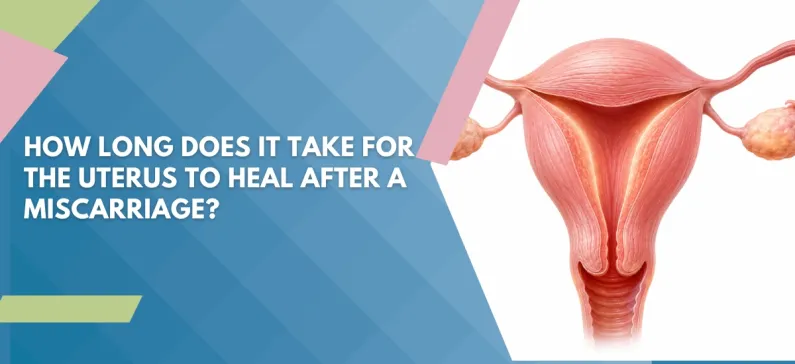
Usually 2 to 6 weeks. That’s the short answer. How long it actually takes for you depends on how far along you were, whether the miscarriage was complete on its own or needed a procedure, and how your body generally responds to hormonal shifts.
“The cramping people worry about is usually just the uterus doing exactly what it’s supposed to do. What I’m watching for is whether the bleeding is calming down over days, not staying the same or getting worse,” says Dr. Mohit Saraogi, one of Mumbai’s leading IVF and fertility specialists at Saraogi Hospital.
Whether you’re recovering now or planning your next steps, our fertility experts are here to help
Quick Answer
● Bleeding: mostly done in 1 to 2 weeks, some women spot longer, that’s not necessarily a red flag
● First period: comes back somewhere in the 4 to 8 week range
● D&C or a later-stage loss: tack on a bit more time than an early, natural miscarriage
Averages, not promises. Your doctor knows your case better than a blog post does.
What's Actually Happening Inside

While that’s happening, hCG and the pregnancy hormones (estrogen, progesterone) start falling back toward baseline. That drop, combined with the uterus physically contracting, is basically the whole explanation for the bleeding and cramping. It’s not a sign something’s wrong. It’s the process working.
Dr. Mohit Saraogi puts it this way to patients: “The cramping people worry about is usually just the uterus doing exactly what it’s supposed to do. What I actually watch for is whether the bleeding is calming down over days, not staying the same or getting worse.”
Week by Week
Weeks 2 through 4, bleeding fades into spotting and then not much at all. The cervix, which had opened up, closes again. Hormones keep drifting back to baseline, which is part of why energy and mood can feel a little off during this window. That’s the hormones, not a character flaw.
Weeks 4 through 8 is where most women land as “fully healed.” Periods usually return in this window. Here’s the part that surprises people: ovulation can happen before that first period shows up. Which means, yes, you could technically get pregnant again before you’ve had a single period since the loss.
What Changes the Timeline
Not a fixed formula, but a few things move the needle:
● Early vs. late miscarriage: Miscarriages earlier in pregnancy generally mean less tissue and a shorter physical recovery than ones later in the first or second trimester.
● Complete vs. incomplete: Whether everything passed on its own (complete) versus something’s left behind and needs treatment (incomplete) matters too; complete tends to heal faster.
● D&C vs. natural miscarriage: A D&C clears tissue directly, so bleeding often wraps up sooner, though the uterus itself still needs its own weeks to heal internally regardless. (We’d link a dedicated D&C page here if the site had one; it doesn’t yet.)
● Infection or retained tissue: Will slow things down and needs actual medical attention, not just time.
● General health: Sleep, stress, nutrition, and existing conditions all nudge the timeline one way or another, same as recovery from anything else.
Is It Healing the Way It Should?
When to Actually Call a Doctor
| Symptom | Why it matters |
|---|---|
| Soaking a pad in an hour or less | Could mean retained tissue |
| Fever, chills | Possible infection |
| Severe pelvic pain | Needs a proper look |
| Bad-smelling discharge | Usually points to infection |
| Bleeding dragging on longer than expected | Worth checking, not waiting on |
If any of that shows up, don’t sit on it hoping it resolves. Call.
Not sure if what you’re feeling crosses into “call the doctor” territory? Talk to our team rather than guessing at home. Takes five minutes.
Not sure if you’re due for a repeat semen analysis? Book a consultation and we’ll map out the right testing schedule for your timeline.
The Short List
● Bleeding: 1 to 2 weeks. Period: 4 to 8 weeks
● Ovulation can beat your period back, so pregnancy is possible sooner than people expect
● Heavy bleeding, fever, bad odor: don’t wait these out
● Everyone’s timeline is a little different, and a follow-up exam can settle any doubt
Where This Leaves You

Most of the physical recovery is over within 2 to 6 weeks. The exact number depends on how far along things were and whether a D&C was involved. What’s less predictable is the emotional side, which often takes longer than the body does, and that’s fine. Nobody’s on a deadline here.
Keep an eye on the warning signs above. If something feels wrong, call your doctor instead of waiting to see if it passes. And when you’re ready to think about trying again, a conversation with your fertility specialist will tell you where your body actually stands, which is more useful than any calendar estimate.
For more on timing specifically, we’ve written about 3 months after miscarriage and 1 year after miscarriage, covering the questions people ask us most.
Still have questions about your recovery? Schedule a consultation to get personalized guidance and the reassurance you need.
Frequently Asked Questions
How do I know my uterus has healed after a miscarriage?
Can I get pregnant before my first period?
Does a D&C change the healing time?
When's it okay to exercise or have sex again?
Is heavy bleeding normal after a miscarriage?
External References
- American College of Obstetricians and Gynecologists (ACOG): patient FAQs on early pregnancy loss
- NHS (UK): miscarriage recovery and aftercare guidance
Disclaimer:
This article is for educational purposes only and is not a substitute for professional medical advice; consult Dr. Mohit Saraogi or a qualified physician about your specific symptoms and recovery.