
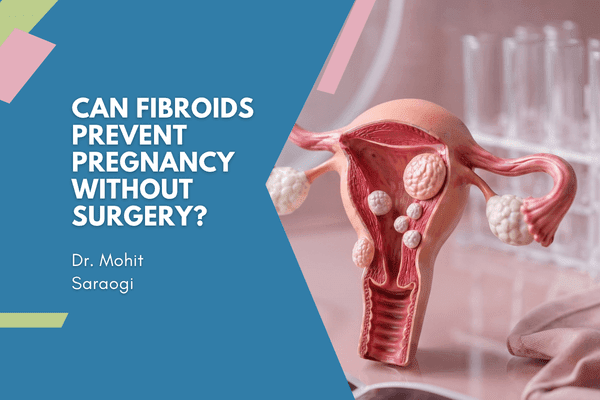
Fibroids can prevent pregnancy, but not always, and not automatically. It depends entirely on their size, number, and where they’re sitting inside the uterus. Many women with fibroids conceive naturally without any intervention. Others find that fibroids are blocking a fallopian tube or distorting the uterine cavity in a way that makes implantation genuinely difficult. Surgery isn’t always the first answer. But knowing which type of fibroid you’re dealing with is.
According to Dr. Mohit Saraogi, one of the Best IVF Doctor in Mumbai at Saraogi Hospital, “A fibroid diagnosis doesn’t mean surgery. It means a proper assessment. Location matters more than size in most fertility cases. A small submucosal fibroid inside the cavity can cause more trouble than a large one sitting outside the uterus. We look at the full picture before recommending anything.”
Worried fibroids might be affecting your chances of conceiving? Speak with a fertility specialist for a proper assessment.
How Do Fibroids Interfere With Pregnancy?
Not every fibroid is a fertility problem. The ones that are tend to interfere in very specific ways.
- Submucosal fibroids: These grow inside the uterine cavity and are the most clinically significant for fertility. They change the surface the embryo needs to implant on, and even a small one can disrupt that process.
- Fallopian tube obstruction: Fibroids sitting near the cornual region, where the tube meets the uterus, can physically narrow or block the tube. An egg that can’t travel through can’t be fertilised.
- Implantation failure: A distorted cavity changes uterine receptivity. Even when fertilisation happens, an embryo transferred into a misshapen environment often doesn’t hold.
- Recurrent miscarriage: Women with submucous fibroids show higher miscarriage rates, likely because the altered blood supply to the lining can’t sustain early pregnancy reliably.
So surgery gets recommended when the fibroid’s location is clearly working against implantation or tube function. Our laparoscopic fibroid surgery page explains what a minimally invasive approach looks like and who it’s appropriate for.
When Can Pregnancy Happen Without Surgery?
Many fibroid cases don’t need an operation before attempting pregnancy. Most gynaecologists still come across patients who were told to remove fibroids immediately, when watchful waiting was actually the right call.
- Intramural fibroids not touching the cavity: Fibroids buried within the uterine muscle, without pressing into the cavity, show minimal impact on natural conception rates in most studies.
- Small subserosal fibroids: These grow on the outer wall and rarely interfere with implantation at all. Monitoring is usually enough unless they’re large and pressing on other structures.
- Hormonal management: GnRH agonists can temporarily shrink fibroids and reduce symptoms. Not a permanent fix, but sometimes enough to stabilise the situation while conception is attempted.
- Hysteroscopy for submucosal fibroids: A small submucosal fibroid inside the cavity can often be removed hysteroscopically, without open surgery and with a shorter recovery, before IVF or natural conception is tried.
Irregular or unexpected bleeding is often the first clue that a fibroid’s location needs a closer look. If you’ve noticed this, it’s worth reading about fibroid bleeding without pain too, since the same scan that checks your fertility often explains the bleeding as well.
Why Choose Saraogi Hospital?
Dr. Mohit Saraogi brings 13 years across gynaecology, obstetrics, and clinical embryology to fibroid cases, with over 18,000 patients treated at IRIS IVF Centre and success rates above 70% for women under 35. At Saraogi Hospital, fibroid assessment is part of every infertility workup, including pelvic ultrasound and MRI mapping where needed, to determine whether the fibroid’s location is clinically relevant to the patient’s fertility plan. Not all fibroids are treated. The ones that aren’t causing cavity distortion or tube blockage are monitored, not removed.
Patients often arrive after being told elsewhere that their fibroids had to come out before anything else could be attempted. That’s not always accurate, and an unnecessary surgery adds recovery time before conception can even begin. Call +91 81697 17250 to get a proper fibroid assessment done before making any decision.
Still not sure if your fibroid needs surgery, or just monitoring? One proper scan usually settles that question.
Frequently Asked Questions
Can fibroids actually prevent pregnancy?
Yes, but only when they distort the uterine cavity or block the fallopian tubes.
Which type of fibroid is most dangerous for fertility?
Submucosal fibroids growing inside the uterine cavity carry the highest fertility risk.
Can fibroids be managed without surgery for pregnancy?
Yes, medication, hysteroscopy or monitoring can help depending on fibroid type and size.
Do all women with fibroids need surgery before conceiving?
Many women with small intramural or subserosal fibroids conceive naturally without intervention.
Disclaimer:
This blog is intended for informational purposes only and should not be considered a substitute for professional medical advice, diagnosis, or treatment.