
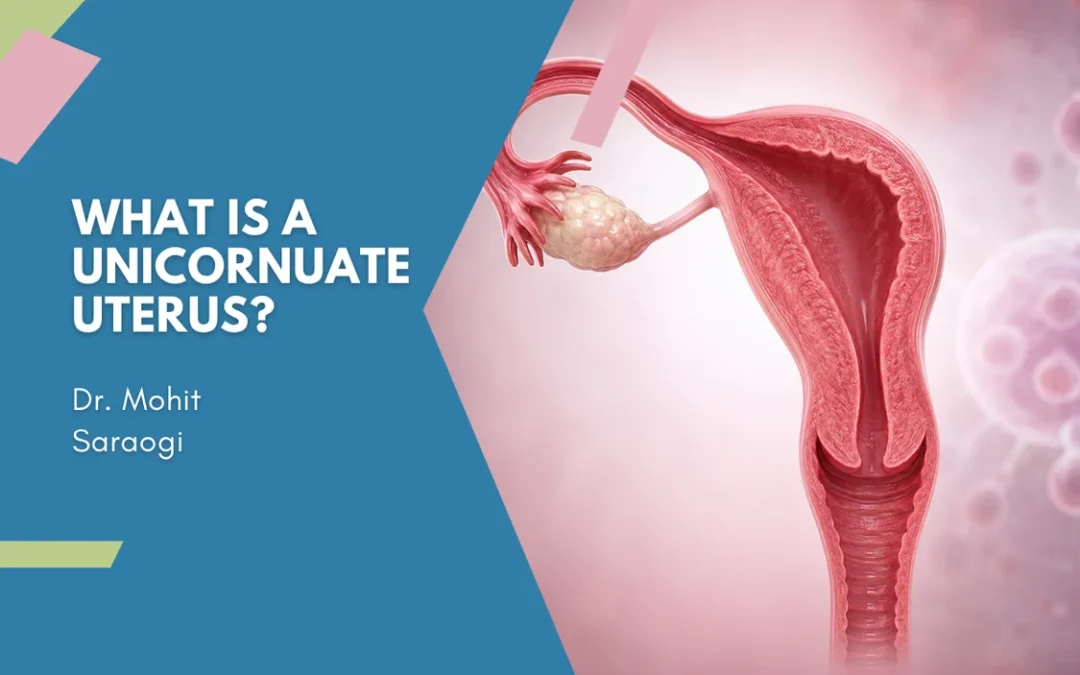
A unicornuate uterus takes shape when only one side of the uterus develops fully. The result is a narrower single-horned form instead of the typical pear shape. A single functioning fallopian tube usually comes along with it. Symptoms rarely appear on their own. The condition often goes unnoticed until someone starts trying to conceive.
Dr. Mohit Saraogi, a fertility specialist at one of the Best IVF Centre In Mumbai, explains, “This diagnosis usually surfaces by chance during a scan ordered for an unrelated reason. It’s typically a pregnancy attempt or a complication that brings it to attention, rather than everyday symptoms. The shape itself is only half the picture. Imaging tells us whether a rudimentary horn is present and whether that horn connects to the main cavity.”
Wondering whether a unicornuate uterus could be affecting your fertility? Get a proper pelvic evaluation from a specialist.
What Are the Symptoms and Causes of a Unicornuate Uterus?
The anatomy behind this condition is set well before birth, however, it is rarely detected until adulthood.
Cause: One of the paired Müllerian ducts fails to grow fully. These are the structures responsible for building a complete uterus during fetal development. Sometimes the duct develops only partway instead. The result is a smaller uterus confined to a single side.
Rudimentary horn: A number of women also have a small underdeveloped horn where the other side would normally sit. Some horns connect to the main cavity. Others don’t. A disconnected horn carries a genuine risk of ectopic pregnancy.
Associated anomalies: The kidneys and uterus form on overlapping developmental timelines. This explains why a missing or malformed kidney on the same side shows up so often alongside this diagnosis.
Diagnosis: A 3D ultrasound or MRI typically confirms both the uterine shape and the horn’s status. A hysterosalpingogram or hysteroscopy may be added for a closer look at the tube and cavity.
For many patients hysteroscopy turns out to be the step that provides real clarity. It lets a doctor view the uterine cavity directly rather than piecing it together from scan images alone.
How Does a Unicornuate Uterus Affect Fertility and Pregnancy?
For most women with this condition getting pregnant isn’t the main obstacle. Sustaining the pregnancy through to delivery is where the added risk shows up.
Fertility impact: Having just one functional fallopian tube lowers the monthly odds of conception somewhat. Becoming pregnant still remains well within reach for most patients.
Pregnancy outcomes: A review of nearly 300 affected women found that roughly half went on to have a live birth. Around a third of pregnancies ended in miscarriage. Preterm delivery affected close to one in five.
Rudimentary horn pregnancy: A pregnancy implanting within a non-communicating rudimentary horn rather than the main uterine cavity becomes a surgical emergency. It requires urgent intervention.
Monitoring during pregnancy: The reduced cavity size means fetal growth and the risk of preterm labor get tracked more closely. This differs from monitoring in a standard uterine anatomy.
Patients recovering from a pregnancy loss connected to a uterine anomaly often want to know about uterus healing after a miscarriage in detail before planning any subsequent pregnancy attempt.
Why Choose Dr. Mohit Saraogi for Unicornuate Uterus Care?
Dr. Mohit Saraogi brings thirteen years across gynaecology, obstetrics, and clinical embryology to the diagnosis and management of uterine anomalies, with over 18,000 patients treated at IRIS IVF Centre and success rates above 70% for women under 35. Suspected cases go through proper imaging first before any conclusion is drawn about fertility or pregnancy risk. A diagnosis of unicornuate uterus doesn’t close the door on pregnancy. It simply means the plan has to fit the actual anatomy involved, and that clarity matters most before conception is attempted.
Recently diagnosed with a unicornuate uterus and unsure what it means for you? A thorough imaging workup answers far more than the name of the diagnosis ever could.
Frequently Asked Questions
How common is a unicornuate uterus?
Fairly uncommon. Estimates put it around 0.1 percent of women.
Can someone with a unicornuate uterus get pregnant naturally?
Often yes. Natural conception is possible with somewhat higher risk along the way.
Does a unicornuate uterus always need surgery?
Not always. Surgery is usually reserved for a rudimentary horn causing problems.
What are the pregnancy risks with a unicornuate uterus?
Miscarriage preterm delivery and unusual fetal positioning are the main concerns.
Disclaimer:
This blog is intended for informational purposes only and should not be considered a substitute for professional medical advice, diagnosis, or treatment.