
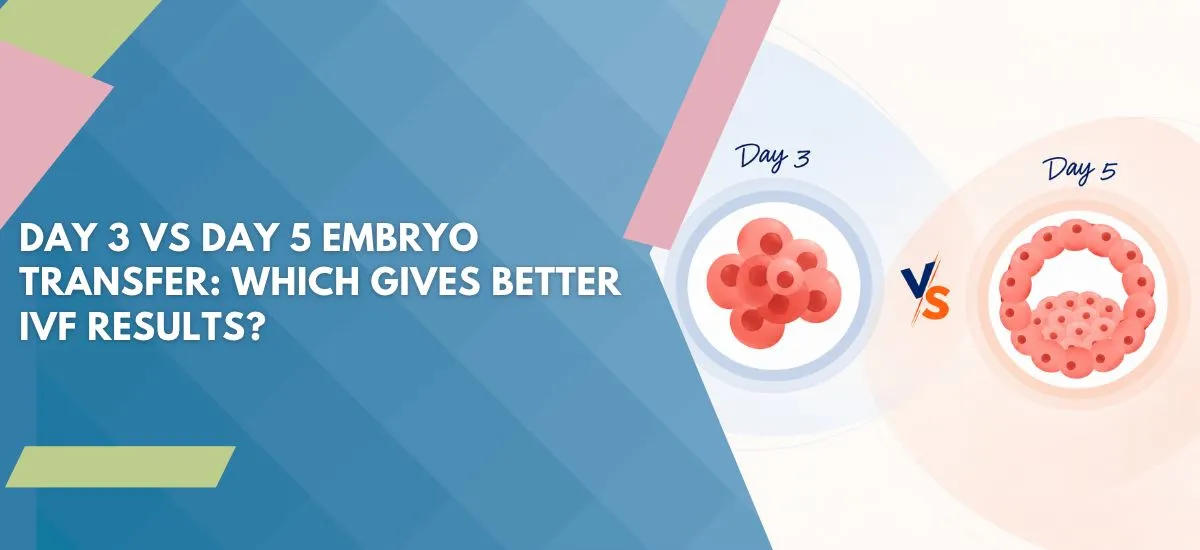
Day 5 (blastocyst) transfer has a higher implantation rate per embryo, around 24% versus 21% for Day 3, and allows PGT-A genetic testing before transfer. Day 3 transfer is often the better choice when you have only a few embryos, since it avoids the risk of losing embryos during extended lab culture. The right choice depends on how many good-quality embryos you have on Day 3, not on which stage is “better” in general.
I get this question in nearly every consultation once embryos are actually growing in the lab. Your embryologist mentioned “waiting for blastocyst,” and now you’re lying awake wondering if your embryos will even make it that far? That worry’s completely fair. Let me walk you through it properly.
“There’s no universal right answer here, it genuinely depends on what’s sitting in front of us on Day 3. Six or seven good-quality embryos, I’ll almost always push to Day 5, it lets us pick the strongest one and cuts the odds of twins. Two embryos after a rough stimulation, though? I’m not gambling both of them in the lab for a stage they might not even need. We transfer on Day 3 and let the uterus do what the incubator can’t predict as well,” explains Dr. Mohit Saraogi, Fertility Specialist at Saraogi Hospital and Iris IVF Centre, Mumbai.
Not sure which is right for your own embryo report? Talk to our team, we’ll walk you through it.
What Happens to Your Embryo Between Day 3 and Day 5?
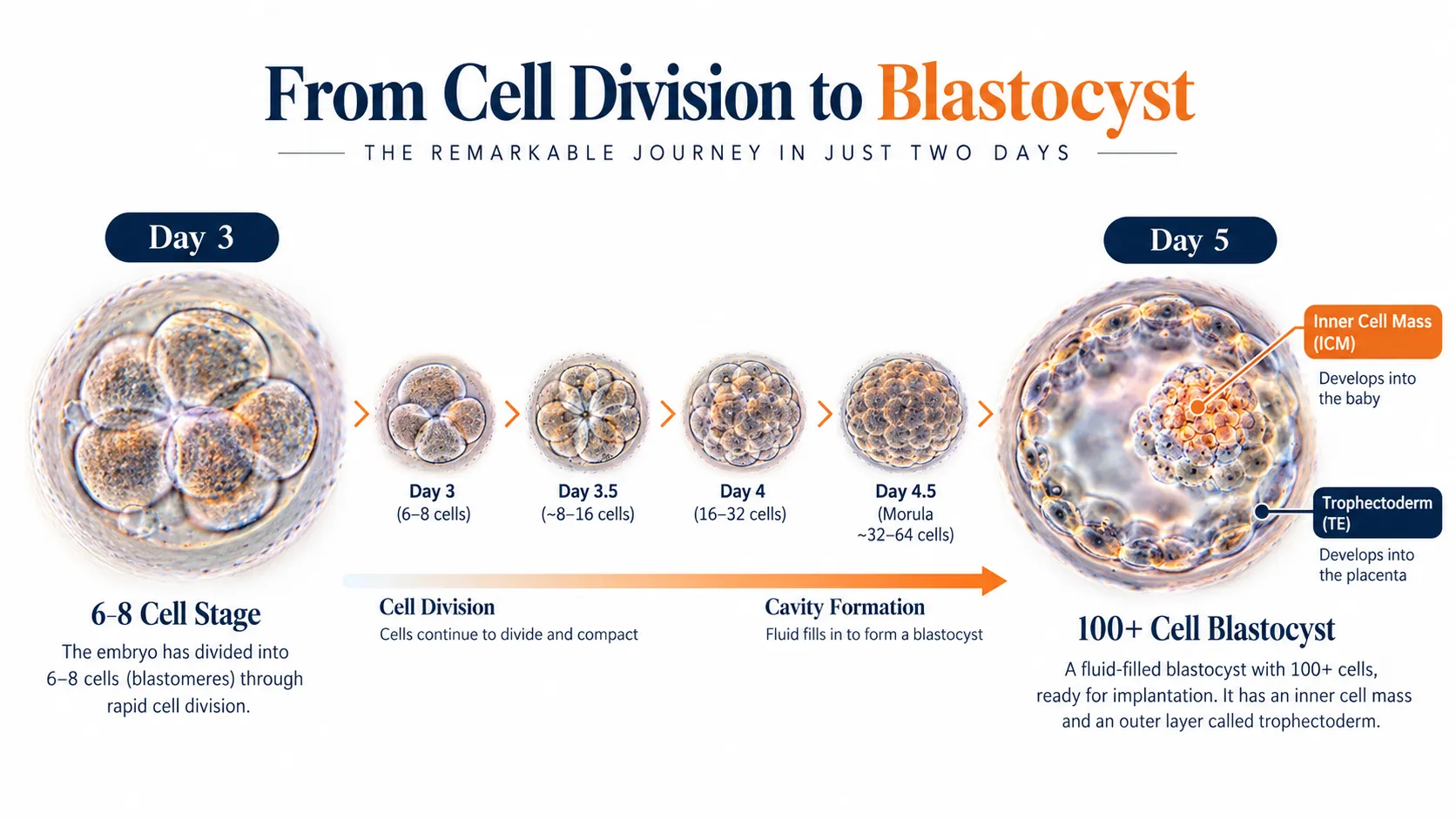
Two days. A lot changes. Not every embryo survives the trip, and that’s just biology, not bad luck.
Day 3: The Cleavage Stage
By Day 3, a fertilized egg has usually split into 6 to 8 cells, what we call the cleavage stage. We grade these on cell count, symmetry, fragmentation, the usual markers. Honestly? At this point it’s still a bit of a guessing game, which ones keep developing and which just stall out nobody can say with total confidence yet.
Day 5: The Blastocyst Stage
Give it two more days, and a surviving embryo balloons past 100 cells. It splits into two distinct parts, an inner cluster that becomes the baby, an outer layer that becomes the placenta. That’s a blastocyst, and it’s a genuinely different-looking thing than what you’d see on Day 3.
Not every embryo gets there. Somewhere around 70 to 75% of decent Day 3 embryos make it to blastocyst by Day 5 in most labs. The ones that don’t were, more often than not, never going anywhere anyway. That’s really the whole point of extended culture, less about growing better embryos, more about finding out which ones were strong all along.
Day 3 vs Day 5 Embryo Transfer: Quick Comparison
| Factor | Day 3 (Cleavage Stage) | Day 5 (Blastocyst Stage) |
| Embryo stage | 6-8 cells | 100+ cells, two distinct cell types |
| Selection accuracy | Lower, harder to predict outcome | Higher, weaker embryos have already dropped out |
| Implantation rate per embryo | Around 21% | Around 24%, higher still with only top-quality blastocysts |
| Risk of no embryo to transfer | Lower | Higher, some embryos simply won’t get there |
| PGT-A testing possible? | Not really practical | Yes, this is standard practice |
| Multiple pregnancy risk | Higher, if more than one embryo goes in | Lower, single blastocyst transfer is common |
When Is Day 3 Embryo Transfer the Right Choice?
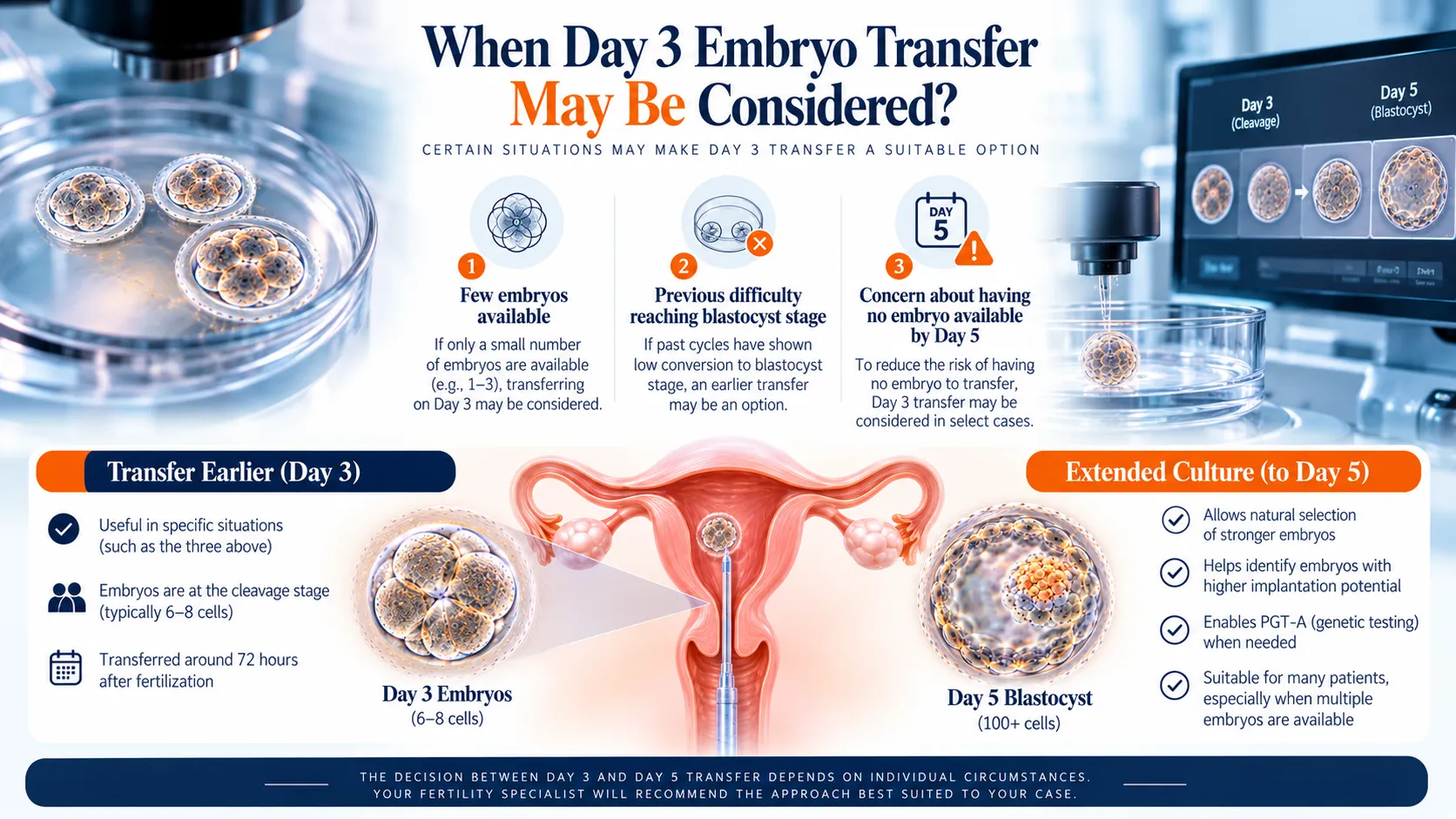
Fewer embryos, more caution. That’s the general rule I work by. Waiting until Day 5 risks losing embryos in a dish that might have done just fine inside the uterus instead.
I lean this way when:
- There are only 2 to 3 embryos total, and every single one matters
- A previous cycle showed embryos struggling to culture past Day 3
- The embryologist flags a real risk of ending up with nothing to transfer if we wait it out
The trade-off, and I say this to patients directly, is that Day 3 gives embryos their shot inside the body instead of the lab. We’re just working with a bit less certainty about which one was actually the strongest of the bunch.
When Is Day 5 Blastocyst Transfer the Right Choice?
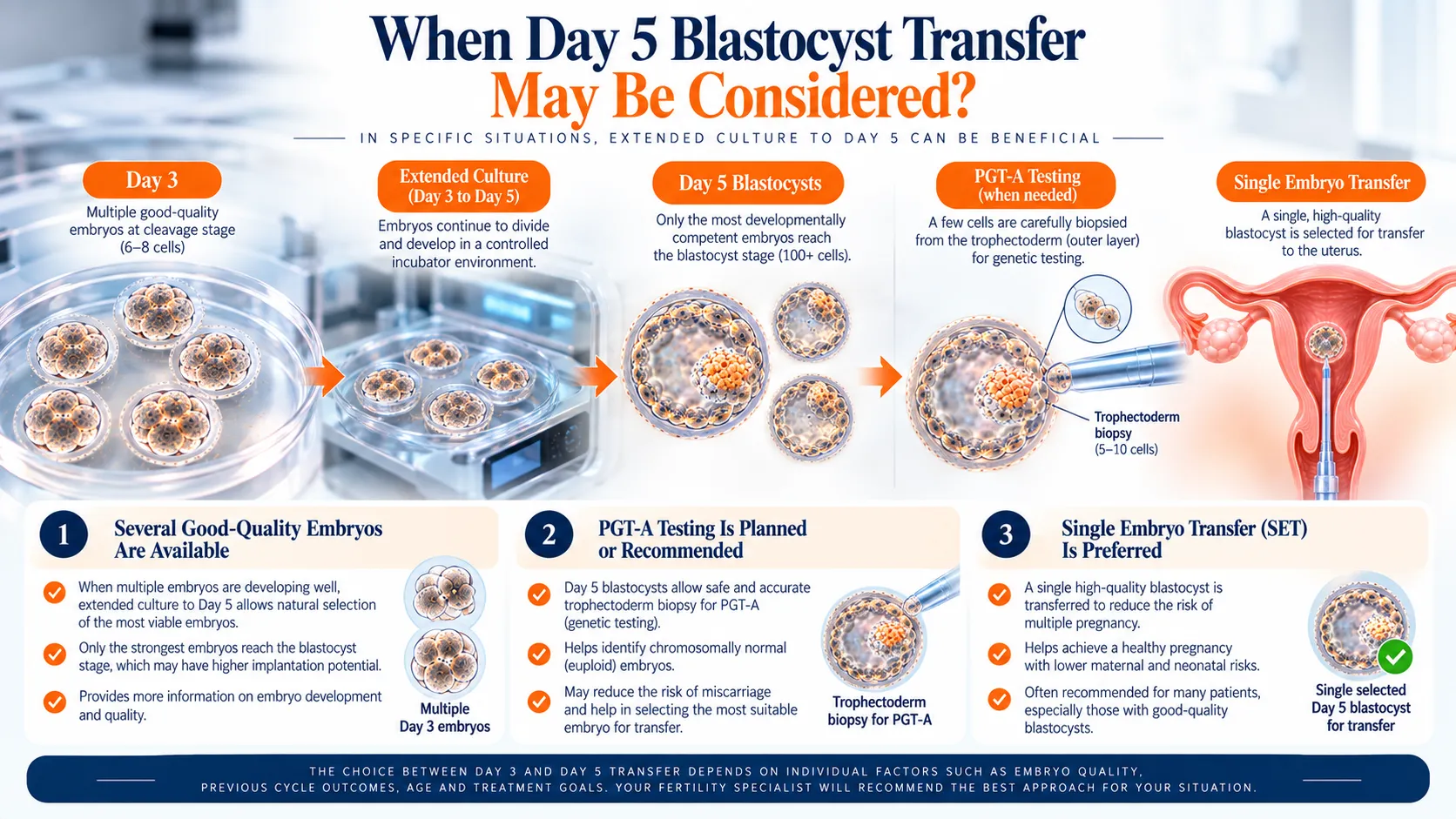
More embryos, more room to wait, and usually the wait pays off in better selection down the line.
I’d usually recommend this when:
- There are several good-quality embryos already on Day 3, enough that extending culture carries low risk
- PGT-A testing is part of the plan, since that needs a blastocyst-stage biopsy to work
- We’re aiming for a single embryo transfer to keep twin risk down, blastocysts implant well enough alone that hedging with two isn’t necessary
What About Day 6?
Some embryos just need the extra day. Day 6 blastocysts can absolutely still result in a healthy pregnancy. The implantation rate runs a touch lower on average, sure, but I’d still transfer or freeze a good one rather than write it off entirely.
Day 3 vs Day 5 Success Rates: What the Data Shows
A randomized controlled trial landed on 21% implantation for Day 3 versus 24% for Day 5. Overall pregnancy rates per transfer came out roughly the same either way, for what it’s worth.
Here’s what gets missed constantly. Culturing to Day 5 doesn’t upgrade an embryo, it just buys the lab time to watch who survives. Most embryos that stall before blastocyst stage were never going to implant regardless of when we transferred them. Day 5 is selection, not improvement. Worth sitting with that distinction for a second.
Age matters too, both for how many embryos even make it to blastocyst and for how likely any given transfer is to work. There’s more on that angle in our piece on IVF success rates by age in Mumbai.
Real Patient Case: Day 3 Transfer With Grade B Embryos
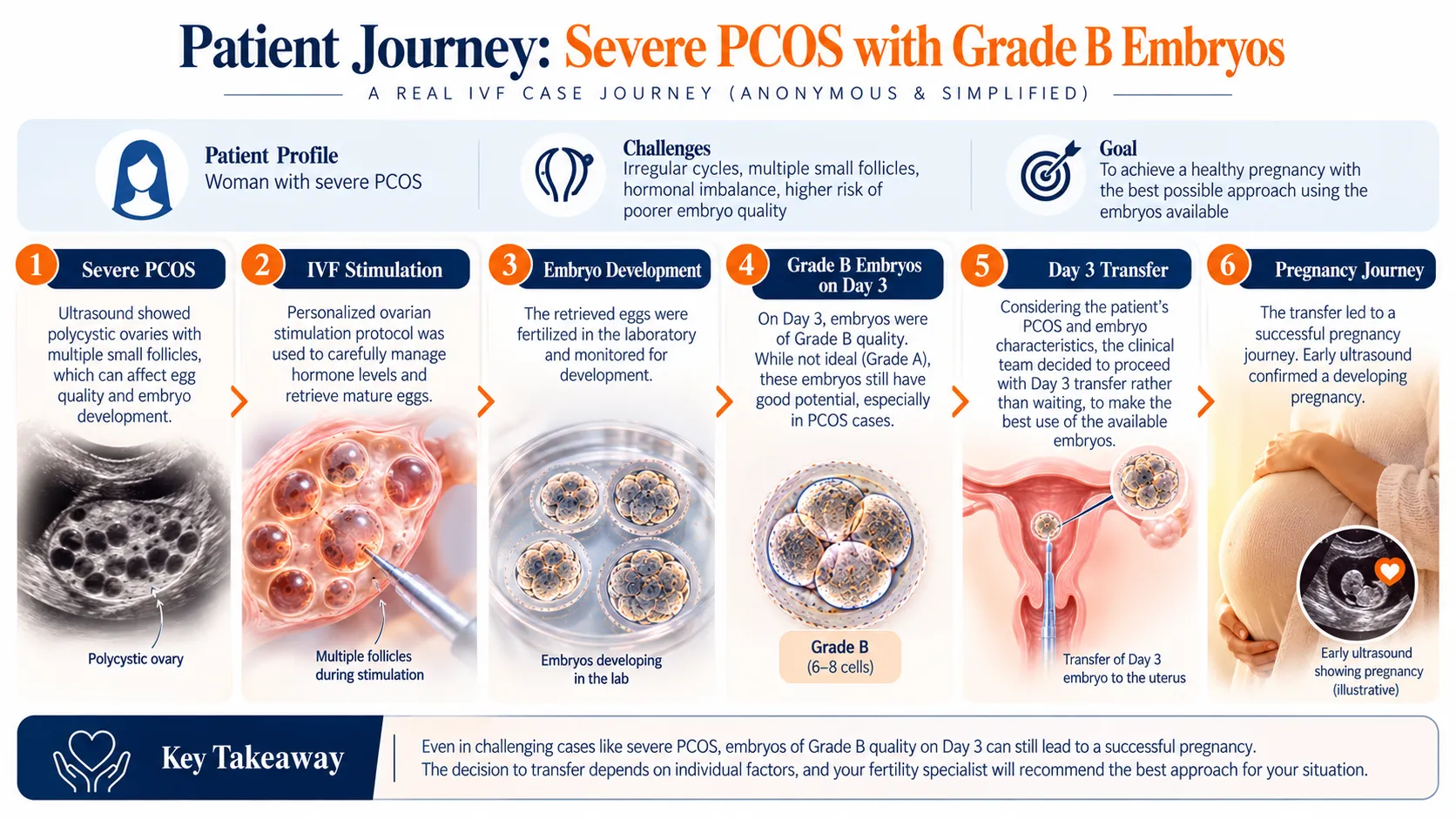
Had a patient a while back, severe PCOS, whose embryos just weren’t hitting top grades by Day 3. We didn’t sit around hoping for an ideal outcome that clearly wasn’t coming. We worked with what we had in front of us. The full story’s in our Grade B embryo IVF success story, worth a read if you’re sitting in a similar spot right now.
Day 3 vs Day 5 for Frozen Embryo Transfer (FET)
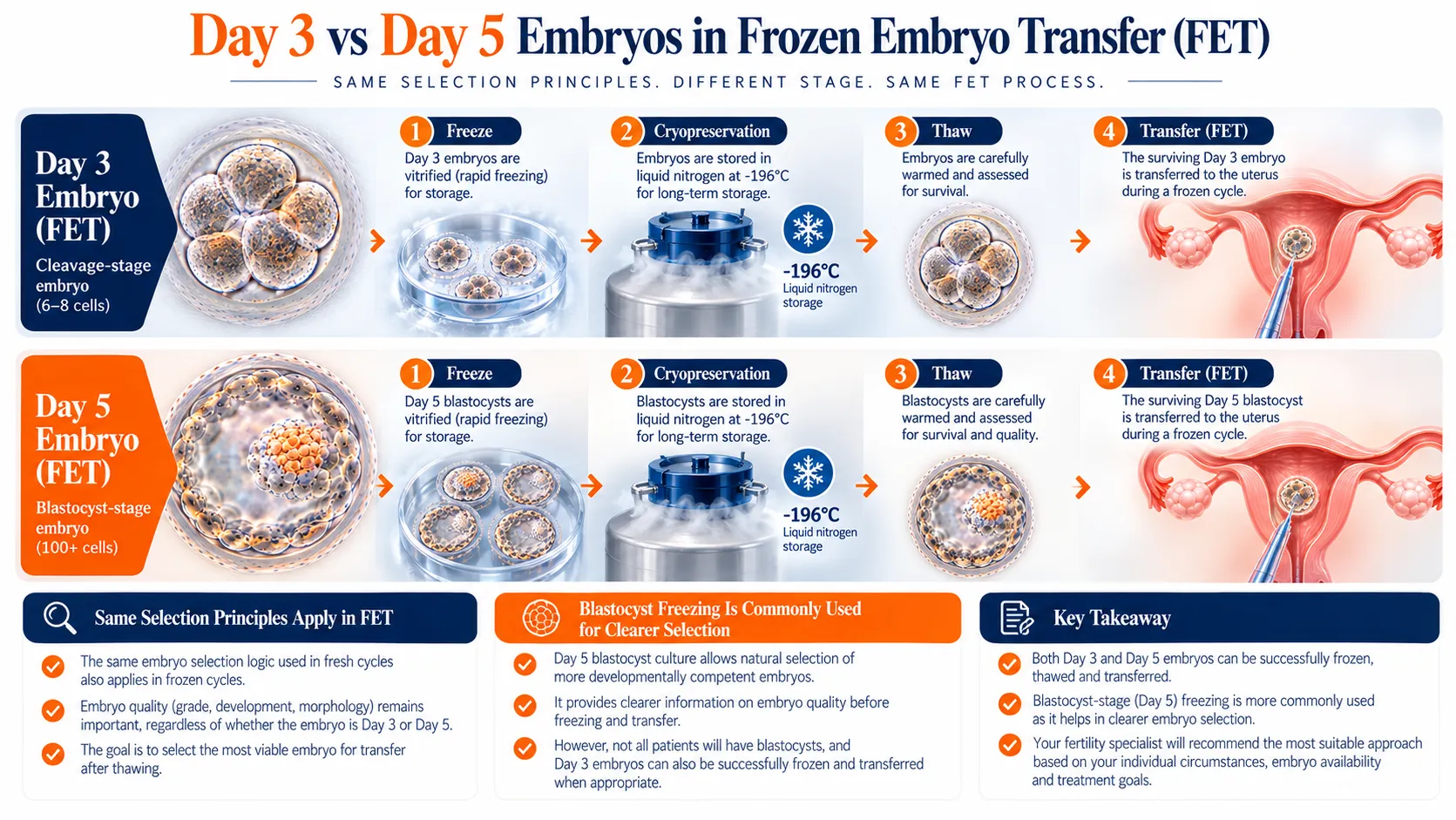
Same decision, same underlying logic, applies just as much to frozen cycles as it does fresh ones. Most clinics now freeze at blastocyst stage specifically because it makes selection cleaner on the back end. Want the fuller frozen-versus-fresh picture? This guide covers it properly.
What to Expect After Day 3 or Day 5 Transfer
Symptoms shift a bit depending on which day your embryo went in. Makes sense, your body’s effectively sitting at a different point in the implantation window either way.
We’ve written more on what to expect after a Day 5 transfer and 3 days after a frozen embryo transfer, if you want that level of detail.
We walk every patient through their actual embryo report before recommending Day 3 or Day 5. Never a one-size-fits-all protocol here. More on how we work is on our About Us page.
Frequently Asked Questions
Is Day 5 just better than Day 3, full stop?
How successful is a blastocyst transfer, honestly?
What if none of my embryos make it to Day 5?
Is a Day 6 blastocyst a worse bet than Day 5?
Can a Day 3 transfer still lead to a healthy baby?
Past 35, which one's actually better?
Disclaimer:
This blog is intended for informational purposes only and should not be considered a substitute for professional medical advice, diagnosis, or treatment.