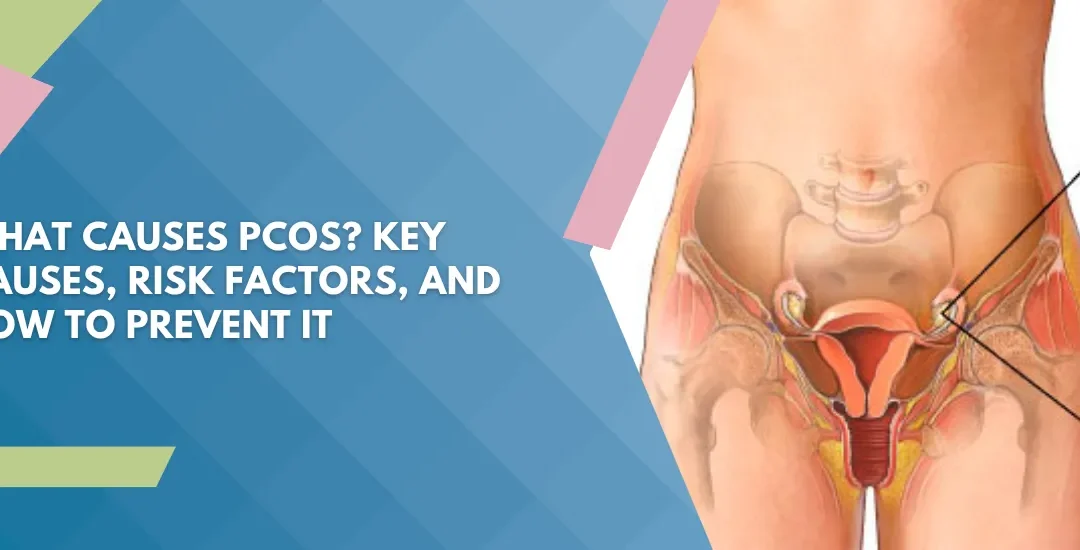
PCOS is caused by a mix of hormonal imbalance, insulin resistance, excess androgen production, genetics, and lifestyle factors. No single trigger explains it on its own. In most women, insulin resistance and elevated androgens feed into each other. This is why symptoms like irregular periods, acne, and excess hair growth tend to show up together.
“What I see most often in practice is that two women can walk in with an identical diagnosis on paper. Yet they need completely different treatment. One might respond well to just managing insulin resistance through diet. Another needs hormonal treatment because her case is driven more by androgen excess. That’s why we run full hormonal and metabolic panels before recommending anything. Treating PCOS the same way for everyone rarely works,” says Dr. Mohit Saraogi, Fertility Specialist at Saraogi Hospital and Iris IVF Centre, Mumbai.
Not sure which of these is driving your symptoms? Contact our team and we’ll help you find out.
Let me walk you through what’s actually going on. This is how I’d explain it sitting across the table from a patient.
So What Is PCOS, Really?
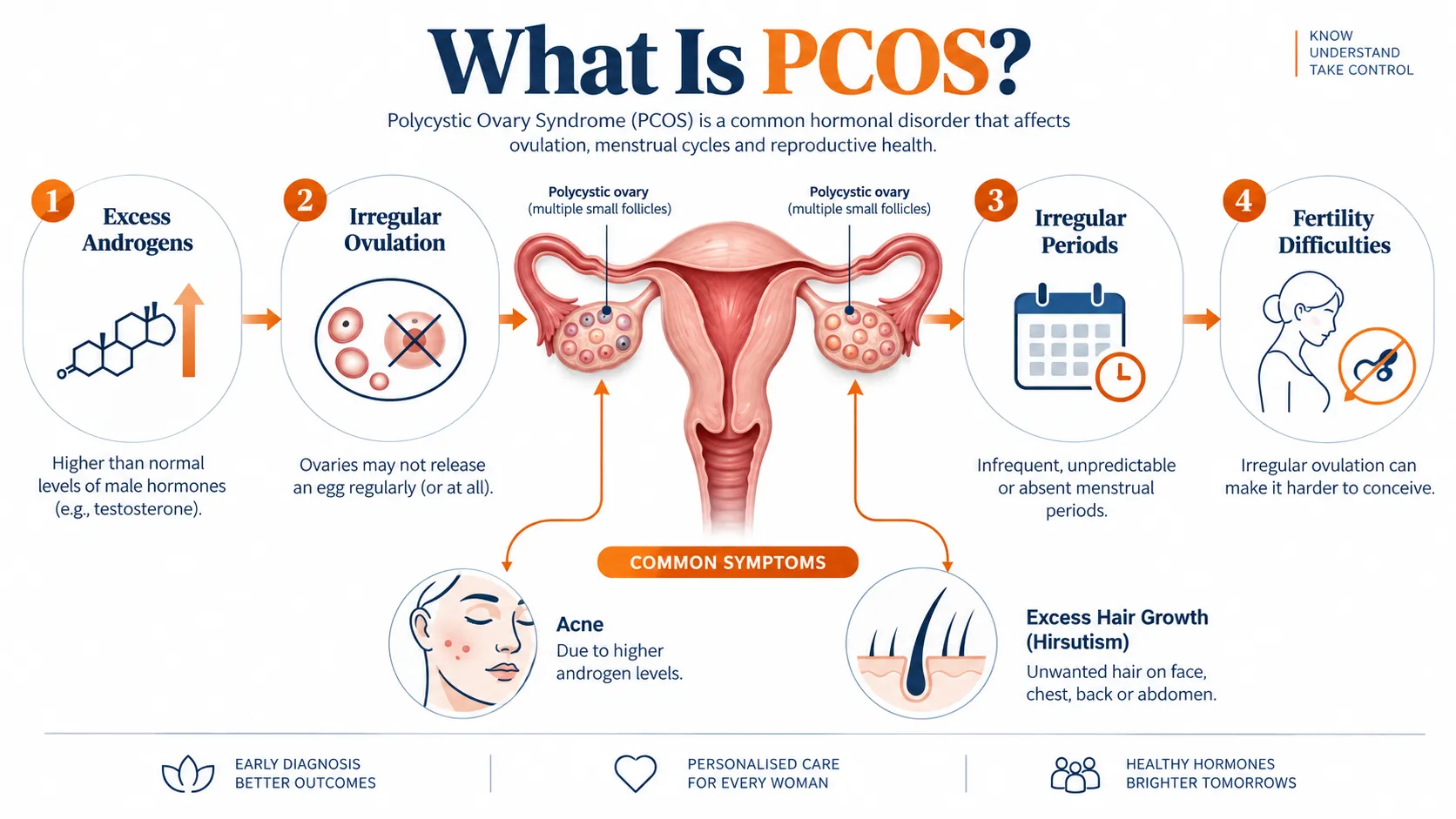
Polycystic Ovary Syndrome affects millions of women. Yet half the explanations out there are useless. They stop at “hormonal imbalance,” as if that phrase means anything on its own.
Here’s what’s actually happening. Your ovaries make too much androgen. That’s the core of it. Everything else, the irregular periods, the acne, the excess hair, the trouble conceiving, comes downstream of that one thing going sideways.
Want to skip ahead? Here’s where we’re headed:
- What causes it (the real mechanisms, not the buzzwords)
- What makes it worse
- Whether you can develop it without any “risk factors” at all
- What happens if it goes untreated
- What you can actually do about it
Why Does the Cause Feel So Hard to Pin Down?
PCOS isn’t one disease. I see that play out constantly in clinic. I’ve had two patients in the same week with similar age and similar symptoms on paper. Their bloodwork underneath told a completely different story. One was insulin resistant, one wasn’t. One had a mother who had PCOS, the other had zero family history at all.
So is PCOS genetic? Did you cause this yourself? Honestly, the answer is sometimes yes, sometimes no, and often both at once. These factors tangle together in a way that’s genuinely hard to separate.
The Real Causes of PCOS, One at a Time
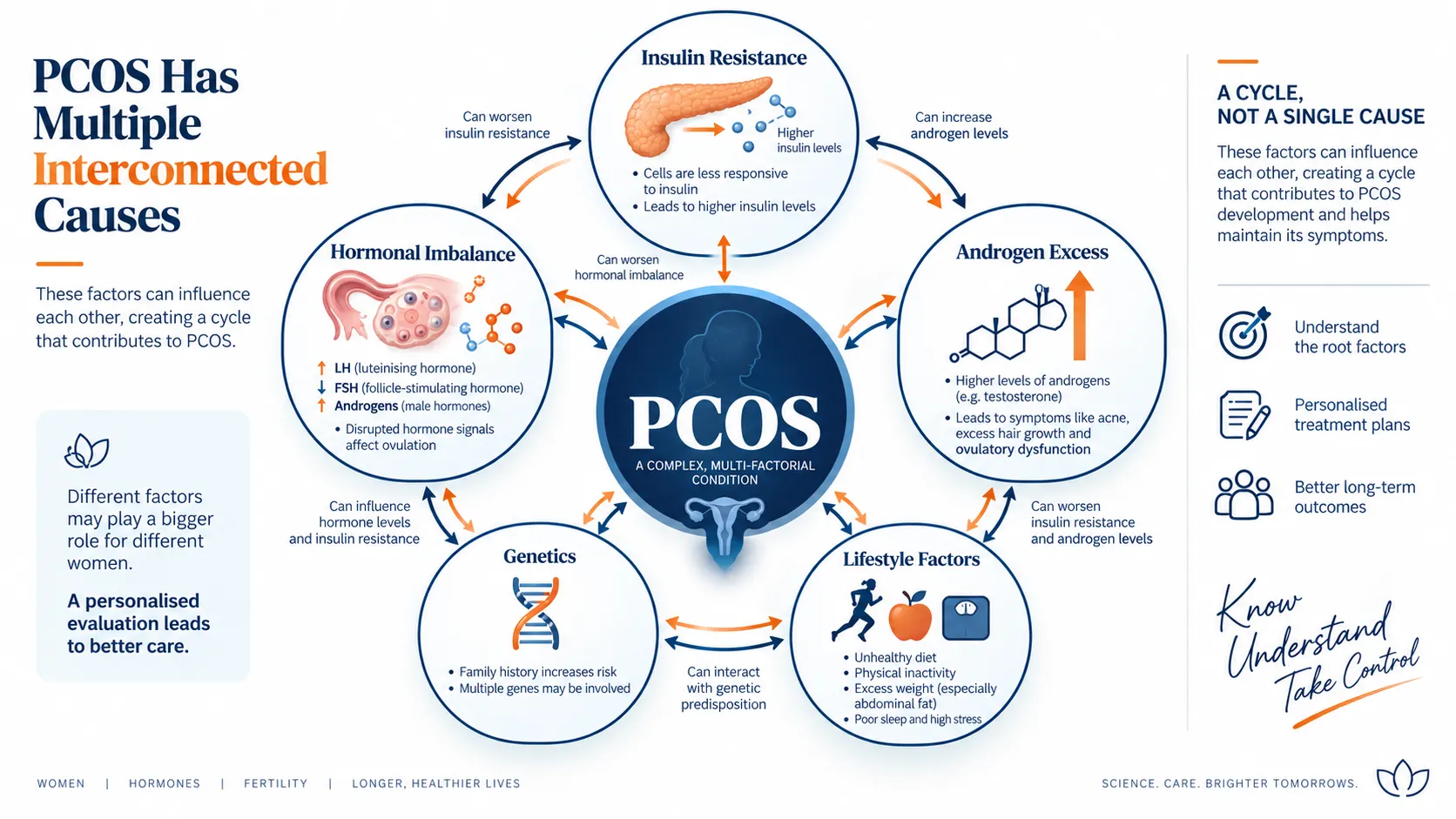
There isn’t one single culprit here. It’s a mix, and the mix looks different for every woman I see.
1. Hormonal Imbalance (LH and FSH Getting Out of Sync)
Two hormones, LH and FSH, normally work together to trigger ovulation each month. In PCOS, that ratio gets skewed. Usually LH runs too high relative to FSH. As a result, eggs don’t mature properly. Instead of releasing, small fluid-filled sacs build up in the ovary.
This is often the first thing we catch on bloodwork when a patient comes in with irregular or missing periods.
2. Insulin Resistance (The One Most Articles Barely Mention)
This cause deserves more attention than it usually gets. Many of my patients with PCOS, including ones who aren’t overweight at all, show some degree of insulin resistance. Their cells simply don’t respond to insulin the way they should. So the pancreas compensates by producing more.
Here’s the part that surprises people: extra insulin pushes the ovaries to make more androgens. This means worse cycles, more weight gain, and a higher long-term diabetes risk. It’s a loop. Honestly, treating the insulin side is often where we see the most improvement in symptoms.
3. Too Much Androgen Production
Every woman makes some androgens naturally. In PCOS, however, the levels climb higher than they should. This excess blocks normal ovulation and causes acne, extra hair growth, and sometimes hair thinning on the scalp.
Can this cause infertility? Yes, not always, but often enough that it’s one of the first things we check for. Here’s more on how these symptoms typically show up, if you want the fuller picture.
4. Low-Grade Inflammation
I bring this cause up less often with patients because it’s harder to explain quickly. Still, it matters. Chronic, low-grade inflammation shows up in a lot of PCOS cases. It feeds the same insulin resistance loop mentioned above. Inflammation is also probably behind some of the fatigue and skin issues patients report.
5. Family History and Genetics
If your mum or sister has PCOS, your risk goes up. The same is true if type 2 diabetes runs in the family. However, genetics alone rarely explain the whole picture. Something in the environment or lifestyle usually has to tip things over before symptoms actually show up.
If PCOS runs in your family, our gynecology team can talk you through screening options.
What Makes PCOS Worse, Even If It Didn't Cause It
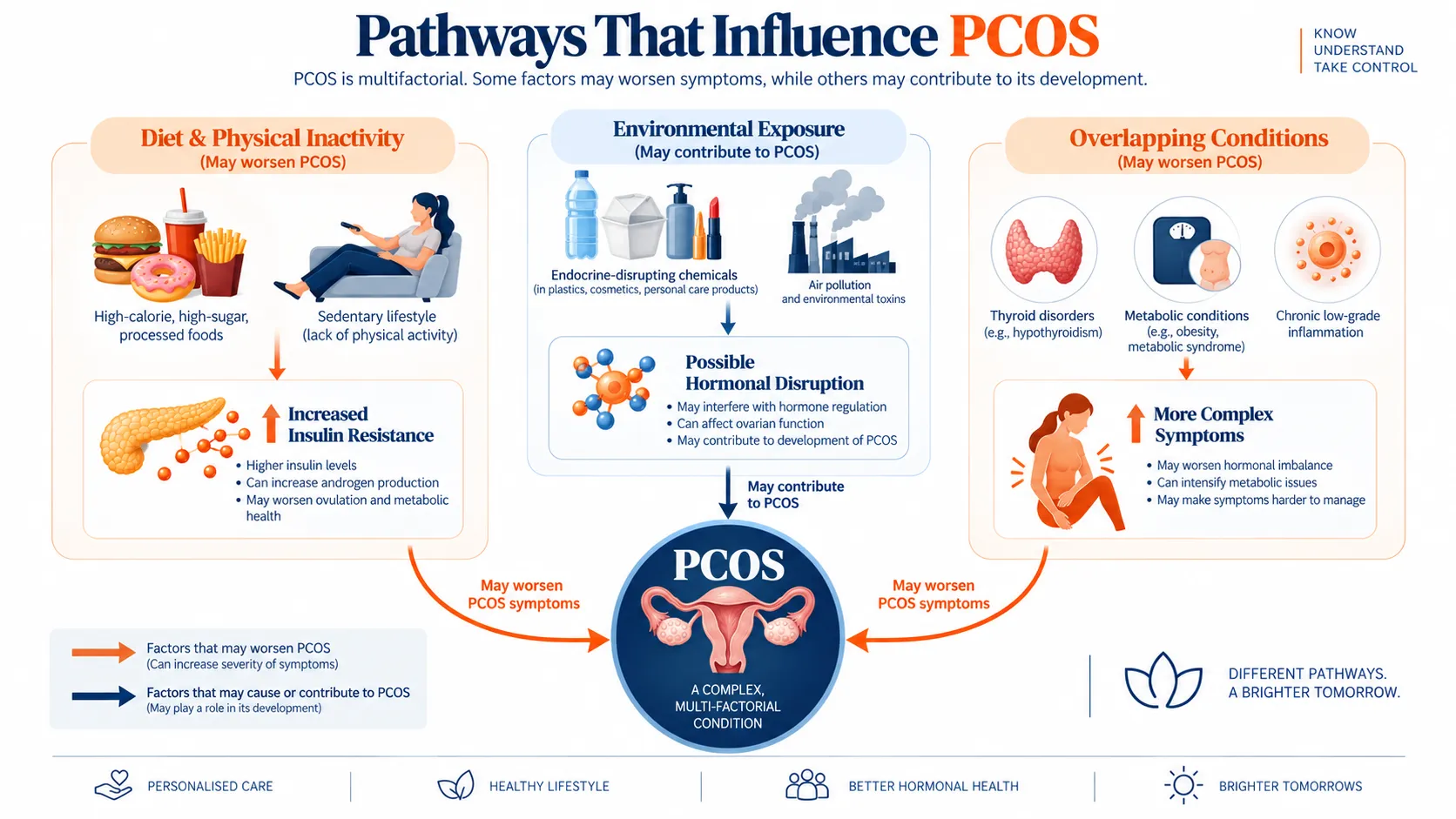
A few things won’t give you PCOS on their own. Still, they’ll absolutely make an existing case harder to manage.
Diet and activity. Refined carbs, sugary drinks, and sitting all day worsen insulin resistance specifically. I’ve watched patients bring cycles back to something resembling regular just by tightening up this one area, alongside treatment.
Environmental exposure. This area is still emerging, so take it with appropriate caution. However, growing evidence suggests that endocrine-disrupting chemicals in certain plastics and cosmetics play some role in hormonal disruption.
Overlapping conditions. Thyroid issues, metabolic syndrome, and chronic inflammation can all sit alongside PCOS. Together, they muddy the diagnostic picture.
Curious about hormonal recovery more broadly? We’ve also written about what happens hormonally after a miscarriage, which touches on some related shifts.
Can You Get PCOS Without Any of the Usual Risk Factors?
Yes, genuinely, and it trips people up every time.
I’ve had lean patients walk in with textbook irregular cycles and elevated androgens. They had no insulin resistance on their labs and no family history whatsoever. Doctors call this lean PCOS. It’s a good reminder that this condition doesn’t fit neatly into one box. That’s exactly why I don’t treat two patients the same way, even when their diagnosis looks identical on paper.
Worried you might already be seeing some of these signs? Get in touch with us before things progress further.
Why Early Diagnosis of PCOS Matters
The sooner we identify PCOS, the sooner diet, exercise, and weight management can start doing real work. Medical treatment, where needed, complements these changes well.
Ongoing Monitoring and Team-Based Care
I rarely manage PCOS alone. It usually takes a team, myself, an endocrinologist sometimes, and a nutritionist almost always. One of my patients wrote up her own experience with this if you want to see it in her words. Read her story in our PCOS to parenthood case study.
This was never just about fertility for most of my patients. It’s about the next thirty years of their health, too.
Key Takeaways on PCOS Causes
There isn’t a single cause of PCOS, and that’s the main takeaway here. Excess androgens, insulin resistance, genetics, and lifestyle all show up in different proportions in different women. This is exactly why cookie-cutter treatment plans don’t work well.
The good news is that most of what drives PCOS responds to treatment. Early diagnosis, the right lifestyle shifts, and, where needed, proper fertility care get most of my patients to a genuinely good place.
At Saraogi Hospital and Iris IVF Centre, we build each plan around the person in front of us, not a template pulled off a shelf. Our About Us page has the full picture of how we work.
Ready to talk to someone about your own symptoms? Contact us and we’ll set up a time to go through your case properly.
Frequently Asked Questions
Does stress cause PCOS?
Not on its own. However, it can make existing symptoms worse, with cycles more irregular and hormones more out of balance, in someone who already has the condition.
Can you have PCOS with zero family history?
Absolutely. I see it regularly. Hormonal, environmental, and lifestyle factors can all cause PCOS without any genetic push at all.
Is there a cure for PCOS?
Not in the sense of making it disappear permanently. Still, insulin resistance and hormonal imbalance, the two biggest drivers, respond really well to the right combination of lifestyle change and medical treatment. Explore what we offer if you haven’t already.
Will PCOS stop me from getting pregnant?
It can make ovulation less predictable, sometimes absent altogether. Despite this, most women with PCOS go on to conceive with the right support.
What actually causes the acne and extra hair growth in PCOS?
Excess androgens cause it directly. This is the same hormone spike behind the irregular cycles.
This article reflects general medical information and clinical experience. It isn’t a substitute for an in-person consultation. Every case of PCOS looks a little different, so come talk to us about yours.