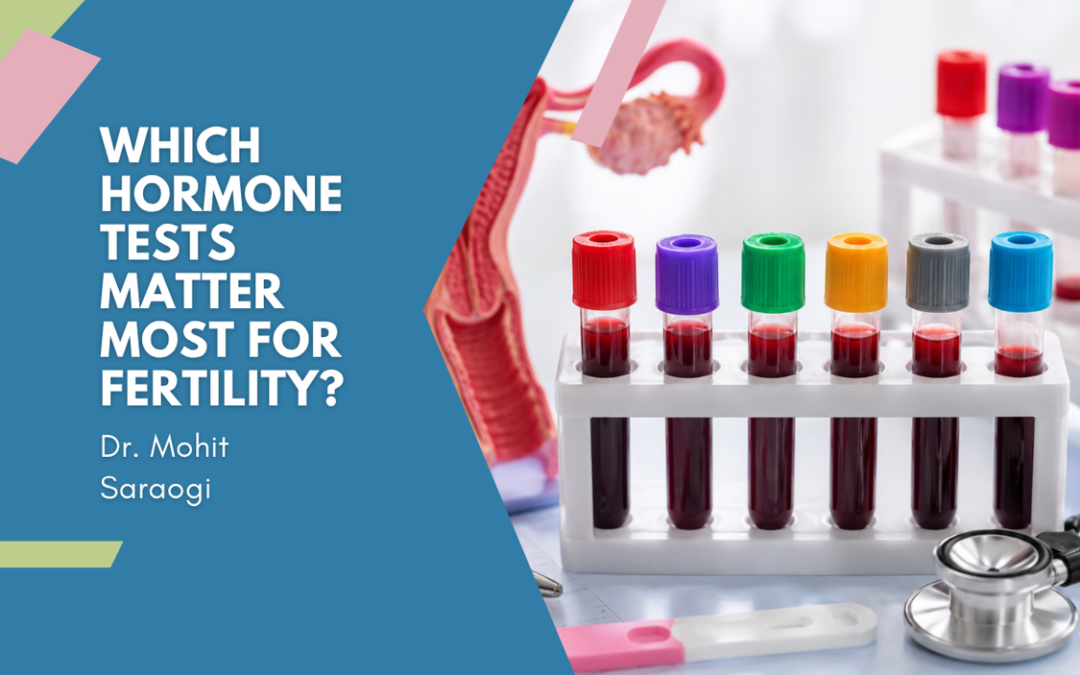
Fertility hormone tests really answer three questions through one basic blood panel. How many eggs remain in reserve. Whether ovulation is happening the way it should. Whether an underlying metabolic imbalance is working against conception. A handful of tests drawn on the right cycle day cover most of what matters clinically. Not every hormone on a standard lab panel carries equal weight for fertility though. Knowing which ones do saves both time and money.
Dr. Mohit Saraogi, one of the Best IVF Doctor in Mumbai, explains, “Patients often bring in a long list of hormone results and ask what all of it means. Most of it is useful context. A smaller set actually changes the treatment plan. AMH and a day 2 or 3 panel tell us more about where we’re starting from than almost anything else we order.”
Not sure which hormone tests you actually need before your first consultation? Get a clear targeted panel from a fertility specialist.
Which Hormone Tests Matter Most for Ovarian Reserve and Ovulation?
These are the tests that most directly shape a fertility treatment plan.
AMH (Anti-Müllerian Hormone): This is the single most reliable marker of ovarian reserve available today. It doesn’t fluctuate with the menstrual cycle. It can be drawn on any day.
FSH (Follicle-Stimulating Hormone): A day 2 or 3 blood draw shows how hard the body is working to stimulate egg growth. Elevated levels often point to declining reserve.
LH (Luteinizing Hormone): This hormone triggers ovulation. An imbalanced LH-to-FSH ratio is one of the classic markers used in diagnosing PCOS.
Progesterone: A mid-luteal phase progesterone test confirms whether ovulation actually occurred that cycle. That’s a separate question from whether the ovaries have eggs to release.
An infertility treatment evaluation typically starts with exactly these four tests. They give the clearest picture of ovarian reserve and ovulatory function before anything else gets added to the panel.
What Other Hormone Tests Are Used to Evaluate Fertility?
Beyond ovarian reserve and ovulation, a few other hormones round out a complete fertility hormone tests panel.
TSH (Thyroid-Stimulating Hormone): Both an underactive and overactive thyroid can disrupt ovulation. Thyroid dysfunction is common enough that it’s checked routinely, not just when symptoms appear.
Prolactin: Elevated prolactin can suppress ovulation entirely. It’s often ordered alongside TSH since the two hormones are closely linked in infertile women.
Testosterone and DHEAS: These androgens help confirm a PCOS diagnosis when levels run high. They’re typically interpreted alongside LH and FSH rather than in isolation.
Estradiol: Measured alongside FSH, an elevated estradiol level can mask a rising FSH result. That’s why the two are usually read together rather than separately.
Hormone testing works best as one piece of a larger picture rather than a standalone answer. Our blog on low ovarian reserve goes deeper into what an abnormal AMH or FSH result actually means for treatment options.
Why Choose Dr. Mohit Saraogi for Fertility Hormone Testing in Mumbai?
Dr. Mohit Saraogi brings thirteen years across gynaecology, obstetrics, and clinical embryology to fertility hormone evaluation, with over 18,000 patients treated at IRIS IVF Centre and success rates above 70% for women under 35. Every hormone panel is built around the patient’s actual history and symptoms rather than ordered as a blanket checklist, so results come back genuinely useful for treatment planning. That focused approach matters most at the very first consultation, before any treatment path gets chosen.
Wondering whether your last hormone panel actually covered what it needed to? A quick review often reveals gaps worth filling before treatment begins.
Frequently Asked Questions
Which hormone test best predicts ovarian reserve?
AMH and FSH are the two most reliable markers of ovarian reserve.
When should fertility hormone tests be done in the cycle?
A day 2 or 3 blood draw gives the most accurate baseline reading.
Do all women need a thyroid or prolactin test for fertility?
Not always. Thyroid or prolactin tests get added based on symptoms.
Can one hormone test alone confirm a fertility diagnosis?
No. A single result rarely predicts pregnancy; tests get read together.
Disclaimer:
This blog is intended for informational purposes only and should not be considered a substitute for professional medical advice, diagnosis, or treatment.