
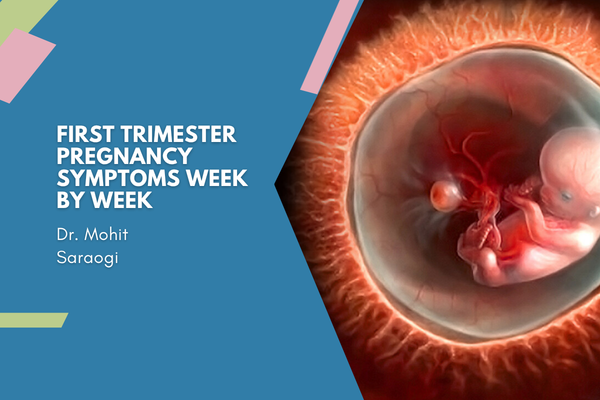
The first trimester covers weeks 1 to 13 of your pregnancy. For most women, this is the phase where the body changes the fastest and the symptoms hit the hardest, often before you even have time to process that you are pregnant.
Dr. Mohit Saraogi at Saraogi Hospital puts it simply: “Every woman’s first trimester is different. Some feel everything at once. Some feel very little. Both can be completely normal. What matters is knowing what to watch for and when to reach out.”
This guide walks you through what is actually happening in your body, week by week, and what symptoms are expected, manageable, or worth a call to your doctor.
What Is the First Trimester and Why Does It Matter?
The first trimester is the foundation of your pregnancy. Your baby goes from a cluster of cells to a fully formed foetus with a heartbeat, limbs, and developing organs, all within 13 weeks.
For your body, this period is intense. Hormones like hCG and progesterone rise sharply. Your blood volume increases. Your digestive system slows down. Your immune system adjusts. All of this happens quietly in the background, which is why you feel so much even when nothing is visibly showing yet.
It is also the trimester where the risk of miscarriage is highest, which is why early monitoring and awareness of symptoms matters more than most people realise.
Week by Week Symptoms in the First Trimester
Weeks 1 to 4: Before You Even Know
Technically, weeks 1 and 2 count from your last menstrual period, before conception even occurs. Fertilisation usually happens around week 2. By week 3, the fertilised egg is travelling to the uterus and beginning to implant.
Most women do not feel much yet. Some notice light spotting from implantation around week 3 or 4, which is often mistaken for a light period. Mild bloating and a heightened sense of smell may begin to appear. A home pregnancy test typically turns positive around week 4.
Weeks 5 to 6: When Symptoms Start to Show
This is where most women first feel that something is different. hCG levels rise quickly during these weeks and that is what drives most early symptoms.
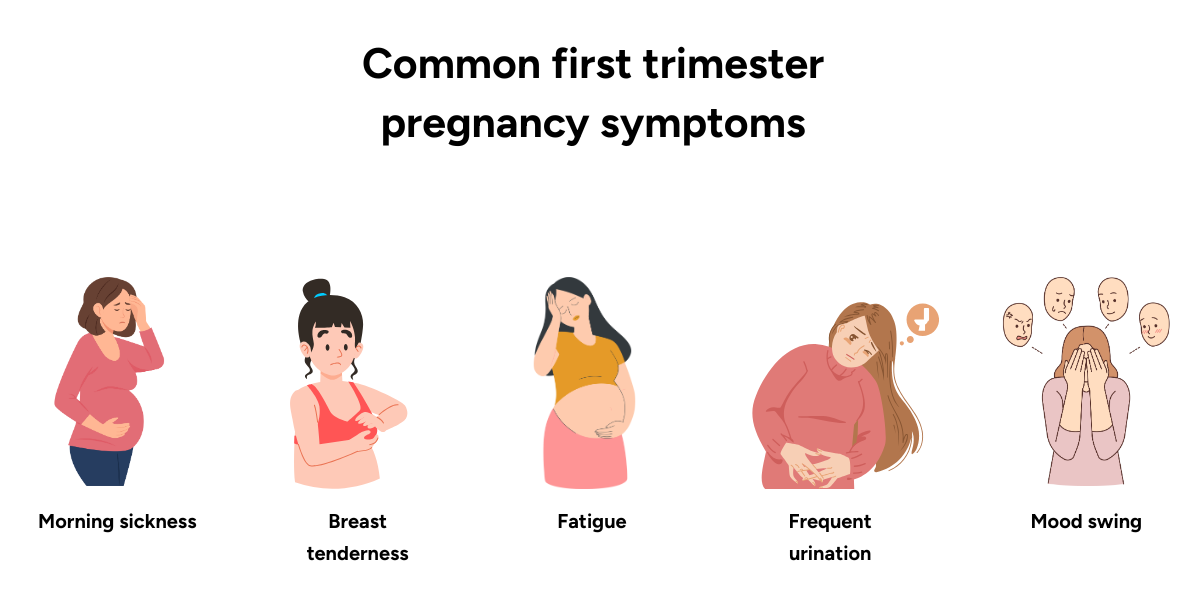
Common symptoms at this stage include nausea, especially in the morning but it can strike at any time, sore and tender breasts, fatigue that feels disproportionate to what you have done, frequent urination, and mood shifts that can feel sudden and unexplained. Food aversions are also common, and some women develop a metallic taste in the mouth.
Weeks 7 to 9: The Peak of Discomfort
For many women, weeks 7 to 9 are the toughest stretch of the first trimester. Nausea is often at its worst. Fatigue can be significant enough to affect daily functioning. Some women experience vomiting multiple times a day.
Heartburn and constipation become more noticeable as progesterone slows digestion. Headaches are common. Mild cramping, without bleeding, can occur as the uterus begins to expand. Emotional sensitivity tends to be high during this phase as well.
The baby’s heartbeat is usually visible on an ultrasound by week 7 or 8, which for many couples is a meaningful and reassuring milestone.
Weeks 10 to 13: Settling Into the Pregnancy
Most women notice a gradual easing of symptoms as they approach the end of the first trimester. Nausea starts to reduce for many by week 10 or 11, though it continues for some into the second trimester.
Energy levels begin to return slowly. The uterus has moved up and out of the pelvis, which reduces some of the pressure and discomfort from earlier weeks. By week 12 or 13, the risk of miscarriage drops significantly and many couples choose this time to share the news.
A nuchal translucency scan is typically done around week 11 to 13 to screen for chromosomal conditions.
Symptoms That Need a Doctor's Attention
Most first trimester symptoms are normal. These are not.
Contact your doctor if you experience heavy bleeding with or without clots, severe cramping that does not ease, a high fever above 38 degrees Celsius, pain on one side of the abdomen which can be a sign of ectopic pregnancy, or persistent vomiting that prevents you from keeping any food or fluids down.
It is also worth mentioning to your doctor if your symptoms suddenly disappear entirely before week 10. A complete and abrupt stop in symptoms at that stage is not always cause for alarm, but it warrants a check.
Trust your instincts. If something feels off, it is always better to call than to wait.
Simple Ways to Manage First Trimester Discomfort

For Nausea
Eat small, frequent meals rather than large ones. Keep plain crackers or dry toast nearby for mornings. Ginger, whether in tea or lozenge form, helps many women. Avoid spicy, oily, or strongly scented foods if they trigger your nausea.
For Fatigue
Rest when you can without guilt. This is your body building a placenta from scratch. Aim for 8 hours at night and a short rest during the day if possible. Light walking can actually help with energy levels better than complete rest.
For Mood Changes
Hormonal mood shifts in the first trimester are real and valid. Talking to your partner, a trusted friend, or a counsellor makes a difference. Do not dismiss what you are feeling as overreaction.
For Constipation and Bloating
Increase water intake and add fibre gradually through fruits, vegetables, and whole grains. Avoid straining. If it becomes uncomfortable, speak to your doctor about safe options during pregnancy.
For Breast Tenderness
A well-fitted, supportive bra worn consistently through the day and night if needed helps significantly. Avoid underwire styles if they add pressure.
Frequently Asked Questions
Is it normal to have no symptoms in the first trimester?
Yes, for some women. Symptom intensity varies widely and having mild or no symptoms does not mean something is wrong. If you are concerned, an early ultrasound can confirm the pregnancy is progressing well.
When does morning sickness usually start and stop?
Nausea typically begins around week 5 or 6 and eases for most women by week 12 to 14. For some, it continues into the second trimester. Severe, persistent vomiting that affects your ability to eat or drink needs medical attention.
Can cramping in early pregnancy be normal?
Mild cramping without bleeding is common, especially in weeks 5 to 10 as the uterus expands. Sharp, one-sided pain or cramping accompanied by heavy bleeding is not normal and needs immediate evaluation.
How much weight should I gain in the first trimester?
Most women gain between 1 to 2 kilograms in the first trimester. Appetite changes and nausea can make this variable. Your doctor will monitor your weight through the pregnancy and guide you based on your starting weight and overall health.
When should I book my first prenatal appointment?
Ideally around week 6 to 8 after a positive pregnancy test. Your first visit will include a blood test, early ultrasound, and a review of your medical history to set up your care plan for the pregnancy.
Can stress affect first trimester symptoms?
Stress does not cause miscarriage, but it can intensify physical symptoms like nausea, headaches, and fatigue. Managing stress through rest, light activity, and support is a reasonable and worthwhile part of early pregnancy care.